Video Editor at TriWest Healthcare Alliance
Army cameraman transitions from combat to corporate video.
By Warren Duffie
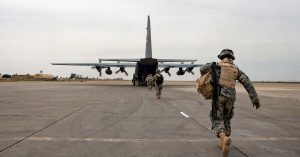
Few things compare to the rush of being a combat cameraman
in a hot zone. Bullets are flying, you and your comrades are fighting for your
lives, and, oh yeah, you’re trying to film compelling footage. It’s both
terrifying and exhilarating. So you could forgive Richard Gooding if he gets a
little bored filming and editing corporate videos.
But that’s not the case.
“I love what I do,” said Gooding, a former Army staff
sergeant. “For starters, it’s great not to get shot at. Sure, I miss the
military, but my current job is very rewarding. I enjoy being able to work with and help military veterans and their families.”
On the Job
Gooding, 31, is a video editor with TriWest Healthcare
Alliance – a privately held company based in Phoenix, contracted by the
Department of Defense to administer the TRICARE program throughout 21 Western states. He helps to produce training videos for TriWest
employees and customers, public service announcements, instructional videos on
TRICARE benefits and awareness/advocacy campaigns.
About 30 to 40 percent of his job is spent traveling to
shoot throughout TriWest’s territory. “I’ve been to really cool places like
Hawaii and Seattle,” Gooding said. “One of the great things about this company
is that it’s always up to date on technology. We have the best video equipment
available. I also love working with veterans. I recently had the chance to work
with several Medal of Honor recipients. That was truly rewarding and
inspirational.”
In Uniform
Gooding was inspired to join the
military by his father, who served three tours in Vietnam. The younger Gooding
enlisted in the National Guard in 1998 as an infantryman before switching to
active duty the following year. He was trained as a combat cameraman at Fort
Meade, Md., and served in Korea, California, Colorado and Iraq.
Gooding spent 2006 in Baghdad. Toward the end of his
deployment, he was shot in the chest during a firefight. He was taken to Germany
before recovering at Walter Reed Medical Center in Washington, D.C. In 2007,
military doctors determined he should be medically discharged.
The Transition
After completing transition classes, Gooding lined up a
job as a video editor for a small TV station in Michigan and separated in
November 2008. However, within a month, the station laid him off.
With nowhere to go, Gooding and his
wife moved into Operation Homefront housing in San Antonio. While there, he
heard about the Wounded Marine Careers Foundation, which educates disabled
veterans from all branches of the military in the fields of media arts and
entertainment, and helps them find work in the industry.
The foundation sent him to San Diego to complete a 10-week
course covering areas such as screenwriting, cinematography and editing.
Graduating at the top of his class, Gooding joined a film editors union and
moved to Los Angeles to find work in Hollywood. Pickings were slim, though, and
by December 2009 he was ready to give up hope when he received a call from a
TriWest representative who had received his résumé.
“They said they were looking for a video editor and was I
interested,” Gooding said. “I flew to Phoenix for the interview and, within two
weeks, was filming at a job site in Seattle.
How’d You Get That Job?
After completing transition classes, Gooding lined up
a job as a video editor for a small TV station in Michigan and separated in
November 2008. However, within a month, the station laid him off.
With nowhere to go, Gooding and his wife moved into
Operation Homefront housing in San Antonio. While there, he heard about the
Wounded Marine Careers Foundation, which educates disabled veterans from all
branches of the military in the fields of media arts and entertainment, and
helps them find work in the industry.
Graduating at the top of his class, Gooding moved to
Los Angeles to find work in Hollywood. Pickings were slim, though, and by
December 2009 he was ready to give up hope when he received a call from a
TriWest representative who had received his résumé.
“They said they were looking for a video editor and
was I interested,” Gooding said. “I flew to Phoenix for the interview and,
within two weeks, was filming at a job site in Seattle.”
What Gooding Likes About His Job
- Working with cutting-edge video technology
- The travel
- Working
with TRICARE beneficiaries
Gooding’s Advice:
Take detailed notes during your transition classes.
“The instructors provide a lot of useful information that can make your
transition much easier.”
Volunteer at local organizations. “You
can make useful civilian contacts. Many times, when new jobs open up at these
organizations, volunteers stand a good chance of getting hired.”
TriWest
Healthcare Alliance
HQ:
Phoenix
Founded:
1996
# of Employees: 1,745
2009 Revenues: $2
billion
www.triwest.com
Did You Know?
TriWest’s coverage area spans Alaska, Arizona, California,
Colorado, Hawaii, Idaho, Iowa, Kansas, Minnesota, Missouri, Montana, Nebraska,
Nevada, New Mexico, North Dakota, Oregon, South Dakota, Utah, Washington,
Wyoming and Texas.