Manager of Management Training Program at The Kroger Co.
Vet uses skills he mastered in the Army to groom a new generation of leaders at Kroger.
by Warren Duffie
For many transitioning veterans, the thought of working for a grocery store chain might not be very appealing. The stereotypical jobs that may spring to mind are checkout cashiers and shelf stockers.
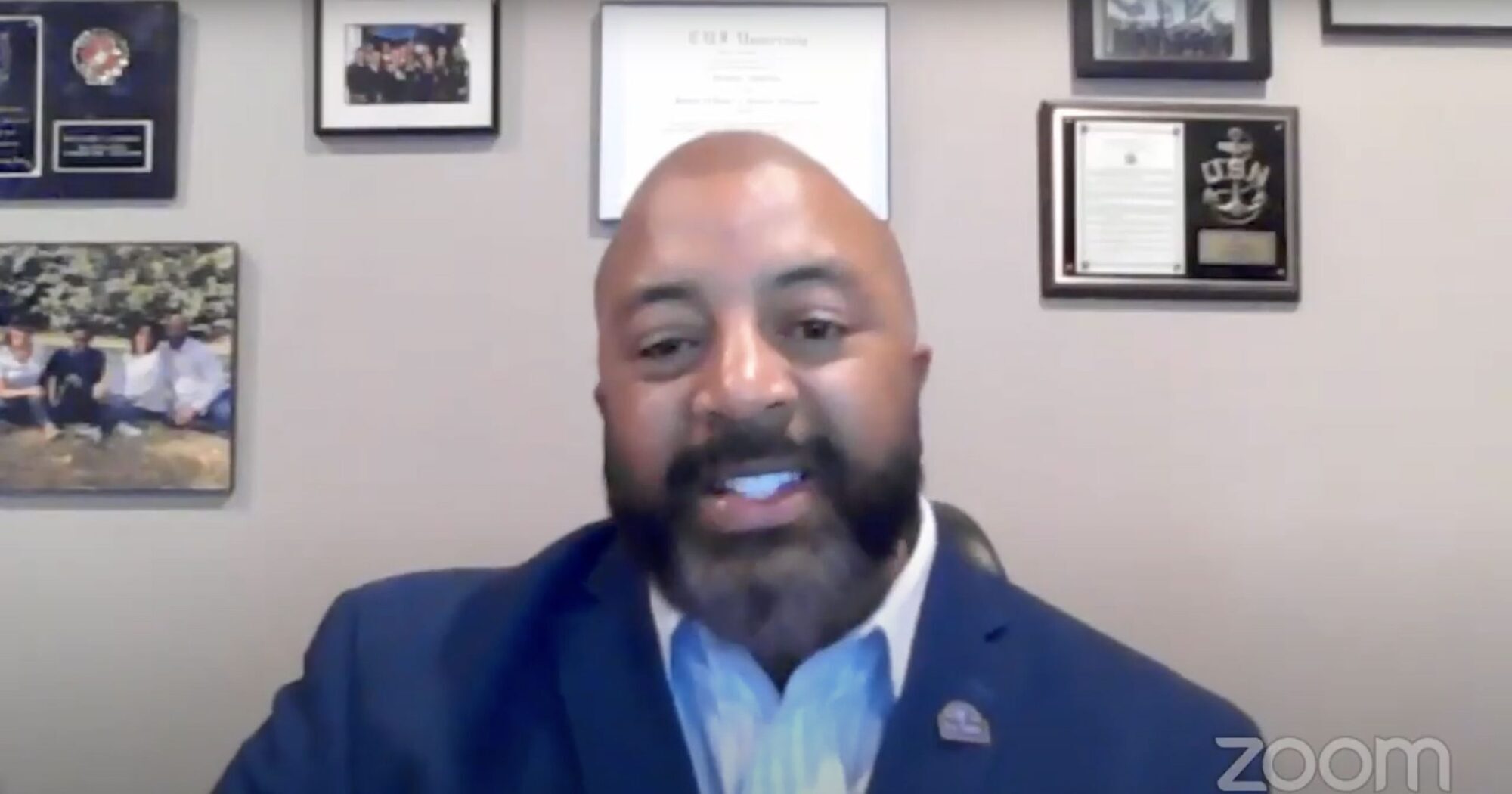
However, with a little research you might find a job that will test and enhance the leadership skills you developed in uniform. Just ask Michael McAffee, who works in the Atlanta division office of The Kroger Co., America’s largest traditional grocery retailer.
“I attended a number of leadership schools during my Army career,” said McAffee, a former first sergeant. “The leadership qualities and people skills I developed – as well as my experience working with diverse individuals – have helped me move up the ladder with Kroger.”
On the Job
This 23-year Soldier wears two main hats. He is the division manager for Kroger’s management trainee program serving 216 stores in Georgia, Tennessee, Alabama and South Carolina. McAffee recruits, interviews and selects candidates for the company’s management trainee program – an 18- to 20-week crucible that eventually places individuals in stores as co-managers. McAffee also is a human resource specialist for 42 of the 216 stores, and handles the transfers of managers in and out of the Atlanta division.
McAffee, 48, begins his workday at 0800, first powwowing with his administrative support staff – which provides updates on trainees about to enter the management program, the progress of current trainees, manager transfers and other pressing issues. Later, he convenes with his boss and attends various meetings. Another of McAffee’s most important duties is attending career fairs on military bases and college campuses.
“We’ve really expanded our military recruiting efforts,” McAffee said. “When I first came on board, I visited bases on my own to spread the word about Kroger. Since then, the company has made it a priority to seek out veteran talent.” Kroger’s efforts have not gone unnoticed: The company was named to the G.I. Jobs 2010 Top 100 Military Friendly Employers® list.
The Company
Kroger employs more than 326,000 associates in 2,470 supermarkets and multi-department stores in 31 states. Company brands include Kroger, City Market, Dillons, Jay C, Food 4 Less, Fred Meyer, Fry’s, King Soopers, QFC, Ralphs, and Smith’s. The company also operates 768 convenience stores, 388 fine jewelry stores, 818 supermarket fuel centers and 40 food processing plants in the U.S.
Headquartered in Cincinnati, Kroger generated 2008 revenue of $76 billion. Kroger was founded in 1883 by Barney Kroger, who invested his life savings of $372 to open a grocery store. The son of a merchant, he ran his business with a simple motto: Be particular. Never sell anything you would not want yourself.”
“I love telling people about the Kroger story,” McAffee said. “When I was an Army recruiter, I was passionate about sharing the Army’s story with people. I have the same passion for Kroger.”
In Uniform
A Tampa native, McAffee enlisted in 1979. “I wanted to be part of something important, to travel, and earn college money. I saw the Army as a way to achieve these goals and learn some discipline along the way.”
McAffee completed basic training and combat engineering school at Fort Leonard Wood in Missouri. He served in Texas, Germany, Korea, Georgia and South Carolina. He spent his last few years in uniform as a recruiter.
The Transition
By October 2001, McAffee decided to leave the Army. He spent a lot of time in transition classes, focusing particularly on mastering the art of interviewing and turning the military jargon on his résumé into “civilian speak.” McAffee also attended numerous career fairs.
“At one fair, the last company I met with was Kroger,” he said. “The representative told me about store management opportunities, but I wasn’t sold on the idea of working at a grocery store. But I went home and did a lot of research on the company and it began to appeal to me. I felt I could be an effective leader of employees.”
From a store manager in 2002, McAffee steadily climbed the ladder to his current position. “I started out at the bottom. But because I was also receiving my retirement pay, I was making the same amount as a first sergeant,” McAffee said. “However, if you compare apples to apples – in this case, 23 years in the military and 23 years with a civilian company – you can make a lot more money as a civilian. Sure, you get your yearly 3 percent military raise, but civilian companies offer larger raises, bonuses and stock options.”
McAffee's Advice
Be patient during your job search. Companies are looking for the right people to fill job openings. It sometimes takes them awhile to evaluate candidates. Don't get discouraged.
Work on your resume. Don't let jargon hold you back. Civilianize your resume. Not everyone knows what an MOS is.
Think outside the box. Don't rule any company out or stick only with what you know. You might find a great job in an industry in which you have no experience.