Happy Veterans Day
Share
Loading...

Majoring in You
SVA galvanizes veterans on campus.
By Dan Fazio 

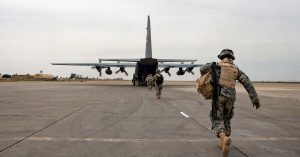
Derek Blumke shifted uncomfortably in his seat, trying to focus on the professor’s history lecture. Time and again Blumke’s thoughts wandered back across the ocean to Afghanistan, where just months before he was helping to keep AC-130H Spectre Gunships in the air with the Air Force’s 16th Special Operations Wing.derek-blumke219x292

History? Heck, Blumke was making history during his three deployments in Operation Enduring Freedom. Now he was just another nameless student sitting in a community college classroom in northern Michigan.

“I felt worthless, because although I was, and still am, serving in the Michigan Air National Guard, I felt I should be back overseas with my old unit and my friends,” Blumke, 29, recalled about the fall of 2005. “I sat in class tuning out the professor and thinking about how I should be back in Afghanistan and should be doing something more important than listening to a professor lecture about history.”

Combat to Campus
Blumke’s struggle to adjust to campus life was hardly unique. Thousands of veterans returning from Iraq and Afghanistan are trading their boots for books and taking advantage of the Post-9/11 GI Bill, which provides a free college education for many.

By spring 2007, Blumke had transferred to the University of Michigan to pursue majors in psychology and political science. It was there he had an epiphany.

“Actually, I was walking across campus one day and saw the cover of the Current magazine, which had a drawing of a Soldier wearing a helmet on the front cover,” Blumke said. “I read the article, which featured the stories of three other student veterans, one of whom would become a co-founder of Student Veterans of America, and it was at that point I realized there were other people going through the same struggles I was. I realized I wasn’t alone and something needed to be done.”

Student Veterans Unite
So Blumke organized the Student Veterans Association at the university. The club connected him to the 48 other veterans who were swallowed by the campus of 41,000 students. There they could talk about the issues unique to student veterans, rekindle the camaraderie they all seemed to miss and mentor newly arriving veterans.

Blumke reached out to other student veteran clubs across the country and quickly realized that the thousands of student veterans flooding the campuses of America needed a voice. In January 2008, Blumke joined with Luke Stalcup, president of a vets group at Columbia University in New York, and Elizabeth O’Herrin, who was president of a veterans club at the University of Wisconsin-Madison, to form the Student Veterans of America (SVA).

Now look...
The movement spread quickly. Two and a half years later, 254 student veteran groups have united under the SVA banner in the U.S.

One of those chapters was formed by Andrea Werner, an Army vet earning a sociology degree at Shawnee State University in southern Ohio. “I started our organization because I struggled with the transition to becoming a student again,” said Werner, whose group joined the SVA in April 2010. “I had met many veterans in class but never did I have a place to go when seeking out information specific to veterans. The need for camaraderie, as well as assistance, was always the complaint I had heard from other veterans, so I approached the university with my ideas.”

Although SVA leaders stress the organization is a bottom-up movement run by leaders at the campus level, the group is led at the national level by a high-caliber team that lobbied hard to get the Post-9/11 GI Bill adopted in June 2008. Today the SVA has its sights set on a legislative agenda that includes advocating on behalf of women veterans in college, expanding the Post-9/11 GI Bill, improving mental health care and helping student veterans find jobs after graduation. 

G.I. Jobs asked Derek Blumke, SVA’s first president, about these issues and more.

GIJ: Why did you join the Air Force?

Blumke: I joined the Air Force because I was trying find direction for my life. My 1.50 GPA and 14 ACT score didn’t put me on track to go to college, and after working the summer before driving a dump truck and a front-end loader in my dad’s gravel pit, I realized I wanted something different. I had a couple of friends joining and it sounded like a great experience. Being able to travel, see the world and be part of something bigger than myself. 

GIJ: What challenges did you face integrating into campus life after the military?

Blumke: When I left active duty and arrived at community college, I didn’t feel all that out of place. Community colleges are generally a bit more age diverse, so I wasn’t isolated into questions about my age very often (which would then usually lead into more questions about the military). The barriers I faced at community college were less about the people around me and were more self-imposed.

GIJ: Did you relate well to your fellow students who never served?

Blumke: When I arrived at Michigan the experience was quite different. I would be sitting in classes with 18- and 19-year-olds and the question would inevitably come up, “So how old are you?” which would then inspire more questions about the military. The conversation would drift from an exchange between two classmates to the conversation being all about me and my experiences in the Air Force. One girl I remember asking me the how old are you question, and when I told her 26, she gave me a puzzled look. At that point I felt obligated to give her an explanation why a 26-year-old man was sitting in her sophomore level psychology class. So I said “I was in the Air Force,” to which she responded, “You were in the military? Why would you ever do that?”

GIJ: What inspired you to form the Student Veterans Association at U-M?

Blumke: The isolation of being so much older than my classmates and having a lifetime worth of experiences weighed down on me. I got the question constantly, “Have you killed people?” and after talking with another Marine I realized I wasn’t the only veteran on campus: at the time I was one of 48 veterans on campus, out of 41,000 students.

GIJ: Why did you and your co-founders see a need for a national organization like Student Veterans of America?

Blumke: We realized there was a need when I was talking on the phone to now co-founder Luke Stalcup in the spring of 2007. After talking with him for weeks about how to advocate for programs on my campus, I asked him the question: “These issues aren’t just at The University of Michigan, or Columbia or Wisconsin, they are everywhere. Ever thought about starting a national organization?” To which he replied, “We thought about that.” And it just went from there. We started e-mailing, Facebooking and phone calling anyone we could find who was interested in getting involved.

GIJ: Why is SVA catching on so quickly?

Blumke: SVA is catching on so quickly because the transition isn’t easy. Service men and women are moving back home and are starting classes and are finding that, while the cost of tuition may not be as big of a problem for as many since the passage of the Post-9/11 GI Bill, the social barriers are the biggest obstacles. They are then coming together on the campuses to connect with others with similar backgrounds and experiences, and again want to be part of something bigger than themselves. They are realizing that just because the uniform is off that their obligation to one another doesn’t end.

GIJ: How does SVA help veterans transitioning from the military to campus?

Blumke: Directly on the college campuses, SVA is providing the sense of community veterans found to be missing. We then help to foster the growth of those student veterans groups by providing chapter grants and assistance with growing their organizations and helping develop university programs. On a larger scale, SVA’s legislative director, Brian Hawthorne, provides advocacy in Washington, D.C., and works with individual veterans when they are having problems with their GI Bill benefits by working directly with the senior leadership of the Department of Veterans Affairs (VA) to cut through some of the red tape that may be blocking their benefits when they need them the most.

GIJ: What is the biggest challenge student veterans face with the military-to-campus transition?

Blumke: One of the biggest challenges a student veteran can face when they leave the service and arrive to campus is a university that does not understand the needs of returning service members, Guard members and Reservists.  In those cases, they must then either effect change for those who will arrive after them, or live with the status quo.  In the words of Maj. Gen. Michael Lehnert (Ret.), SVA Advisory Board Member, “You have to make the pain of doing nothing, more than that of doing something.”

GIJ: Are you satisfied with the Post-9/11 GI Bill after its first year?

Blumke: “While there were many problems and delays in paying benefits to veterans in the first several months, I believe Secretary Eric Shinseki and his team are the right people for the job and are doing their absolute best to ensure returning veterans receive the benefits they have earned.  With that said, there are many legislative changes needed to be made, as can be seen in the legislative agenda SVA’s Brian Hawthorne authored, such as: ensuring distant learners receive a housing stipend and providing Post- 9/11 GI Bill benefits to the more than 70,000 Title 32 Active Guard Reservists who were left out.”  To see the full legislative agenda go to: www.studentveterans.org/resource library. 

GIJ: What are the other key issues SVA is addressing on behalf of student veterans?

Blumke: With the support of the Bob Woodruff Foundation, SVA has been able to begin a program to help wounded, injured and ill veterans transition from the military hospitals to college campuses.  These men and women have already made some incredible sacrifices and it is our responsibility as brothers and sisters to ensure that should they decide they want to go to college they succeed in every endeavor they pursue.  We are also working on programs with the Department of Veterans Affairs, The University of Michigan Depression Center and other organizations to help veterans on college campuses look out for one another when they see a friend in distress.

GIJ: What is SVA doing to help student veterans find jobs after they graduate?

Blumke: In addition to our other programs, we are also addressing what we found to be the last piece to the puzzle for returning veterans, which is jobs after graduation. When we founded SVA we thought we should focus our efforts strictly to the veterans on the campuses. Then we realized in order to really help returning service members we have to create a pipeline, which begins as soon as the service member decides he or she wants to go to school, then helps in the transition to and through college, and then finally a career upon graduation. With that, the newest program we will be coming out with is a job placement program through strategic corporate partnerships with companies and government agencies.

GIJ: If you could do it over, what would you do differently during your transition?

Blumke: Looking back, I could say that I wouldn’t do a thing differently. While the road has been hard, it has been extremely rewarding. Today our leadership team has the honor of representing the most elite group of individuals our world has to offer: American military veterans. We have been able to effect change that is already affecting hundreds of thousands of people.

In addition, I have the opportunity to work with the greatest leadership team I could ever dream to be part of. SVA's Vice President Michael Dakduk is a Marine OEF Vet at UNLV who is now a Truman scholar; our Secretary is a Marine Vet who wants to be a social worker or psychologist working with veterans. Our Board Chairman is a Marine Vet who deployed three times to Iraq and Afghanistan and is now working at the Federal Reserve Bank of Chicago. My co-founder, Luke Stalcup, is absolutely one of the smartest people I've ever met. He was an Army EOD tech in Iraq, who received his undergrad from Columbia University with a double major in math and Arabic studies and just graduated this spring from Georgetown University with a Master’s of Science from Georgetown University's School of Foreign Service. Gerald Kapinos was Security Forces in the Air Force in Iraq and is one of the most passionate people you will ever meet and Peter Meijer, who is getting ready to deploy for his first deployment with the Army Reserves after doing a year at West Point and then transferring to Columbia University.  Finally, Brian Hawthorne who has been representing SVA in Washington, D.C., for the past year, just graduated from George Washington University, and is now starting a Master’s in political management from George Washington University this fall.

The leaders running this organization aren’t just the right people for the job or have incredible résumés, which they are and they do, but over the course of the past two years we have all become incredible friends and will do anything to ensure this organization succeeds and veterans succeed when they arrive to campus.

GIJ: You worked with a DoD group at the Pentagon addressing the implications of the Don’t Ask, Don’t Tell policy? What are the implications of that policy?

Blumke: The working group I took part of included Gen. Carter Hamm, Commanding General, U.S. Army Europe; General Counsel for the Department of Defense, Jeh Johnson; and a short list of other veterans organizations. We discussed the implications on the force should the policy be repealed and how it might affect those returning home. It wasn't to discuss whether we should or shouldn't repeal the policy, but was instead to focus on what will happen if the policy was repealed, so the military could be prepared should it happen.

GIJ: You lobbied hard for the Post-9/11 GI Bill. Why did you feel so passionately about this bill?

Blumke: I felt so passionately about passing this bill because I didn't think it was right that my friends who have made sacrifices beyond explanation for this country should have to struggle when they came home. I was angry that Congress had a bill in front of them that could help my friends go to college and not make the choice between paying their rent or paying their tuition. And I wasn't the only one who felt that way. When I would go to D.C. I would go to Capitol Hill, working with the VFW, the American Legion and other VSOs, and would meet with members of Congress and their staff members I would get a feel for how they were going to vote. If I felt that they were going to vote no, which many were going to, I would go back into the hall and would call our Chapter President in the Congressman's state or district and would have them find a T.V. reporter or news writer, a local VFW Post Commander and would have them go into their local Congressional office and ask, "Why is my senator going to vote NO on the Post-9/11 GI Bill???" It was amazing how quickly our elected representatives would change how they felt about an issue when their constituency found out about what they were doing. It was grassroots advocacy by student veterans around the country that complimented the work other veterans organizations had already been doing that I believe played the tipping point on the passage of the Post-9/11 GI Bill.

GIJ: Are you pursuing an MBA?

Blumke: I'd like to get a joint MBA and Masters of Public Policy. While at this point I need a break from school for a little while, I do want to compliment the education, training and experiences I have already received so I can become a better leader and learn more about some of things that I am interested in.

GIJ: What is your career goal?

Blumke: After leaving active duty five years ago it was to be a photographer; four years ago it was to be a psychologist working with returning veterans; three years ago it was to be in Congress because I thought I could make a difference, hence the poli-sci major; two months ago it was to graduate and go into business making as much money as possible because I was sick of living off of student loans and paying creditors because I came into founding SVA broke and am now in debt to my eyeballs. It was two months ago we co-hosted an event with Mobilize.org where we had more than 30 SVA Members and leaders in attendance and it was their passion that really reminded me why I love doing this so much. I'd like to stay involved in working with and for veterans because it truly is a humbling experience. Long term, I might be interested in going into business to learn how the corporate world works, but for now I'm staying with doing what I enjoy. I can't say I have a definitive career goal because I feel like everything will work out in the end I just need to continue working hard and the path will make it's course.

GIJ: Will you continue to advocate for student veterans? How?

Blumke: I feel I will always be advocating for student veterans and veterans alike. While it may be in different capacities, I will still be helping to ensure those who have made such incredible sacrifices for our country are given every opportunity to succeed and are treated with the dignity and respect they deserve.

GIJ: You share an honor with George Washington: You’re both founding fathers and first presidents. How does it feel to be in such elite company?

Blumke: I'm not so sure I could say I'm in the same "elite" company as George Washington. In fact, I absolutely know I am not. But I can say that I am proud to have done my part to make this organization what it is today, and look forward to seeing SVA grow as he watched as his experiment became a success.

Advice for Transitioners:

  • Have an open mind and learn as much as you can, not just about what is taught, but about the people you go to school with. Some of my closest friends throughout my time at college are not veterans and come from backgrounds far different than my own. I see the world in a way I didn’t before and am proud to call them my friends.
  • If your professor, teacher’s assistant or instructor is younger than you, don’t be a jerk to them. Keep in mind that they give you your grades and even if you have had more life experiences in one year than they had in their 23 of existence, they can fail you and make your life difficult. Smile, let them think they are smarter than you and press on.
  • Don’t look at student government as a bunch of kindergarteners fighting over who gets to use the red crayon, while at times this may be the case. Take on leadership roles. Whether you like it or not, your classmates are now your peers and while you are their peers, they see you as a veteran as a leader and expect it. Not only do they expect it, but your leadership skills are needed. Universities and schools are not very quick to make changes and even when something is wrong, it is difficult to fix it because of the university bureaucracy. 

About SVA

Mission
Today’s veterans face tremendous obstacles in their path of attaining a college degree. These challenges range from a missing sense of camaraderie to a lack of understanding by university faculty and peers. When coupled with the visible and invisible wounds of war, a college degree seems to be an elusive goal for men and women returning from military service. Student Veterans of America (SVA) makes that goal a reality.

SVA ensures that young veterans are successful in their transition from the battlefield to the classroom by:

  • Developing student veteran groups on campuses across the nation to create a network of resources, ideas and support.
  • Developing programs and policies to help veterans transition from combat to the classroom.
  • Centralizing all resources that student veterans need to successfully graduate.
  • Advocating on behalf of student veterans on the state and national level.

Programs
SVA is creating a wide range of programs and services to help veterans succeed in the classroom and beyond. These programs focus on: transitional assistance, educational advancement, job placement, and advocacy. 

The SVA offers a national scholarship program, provides chapter grants, and organizes conferences and leadership summits. Resources for chapters and returning veterans are centralized on

SVA’s website: www.studentveterans.org. Through the member portal, chapters can directly share ideas and information.

CFC Approved
This fall the SVA will join more than 300 nonprofit organizations that benefit from the Combined Federal Campaign (CFC), the world’s largest and most successful annual workplace charity campaign. Pledges made by federal civilian, postal and military donors during the campaign season support these organizations that provide health and human service benefits throughout the world. 

The SVA’s code for donors to use is: 66793.

2010 Legislative Agenda
These are the SVA’s legislative priorities for 2010, which address the six factors critical to student veterans’ success:

  • Improving the Post 9/11 GI Bill
  • Helping Graduating Veterans Find Jobs
  • Overhauling VA Educational Benefits
  • Ensuring a Seamless Transition from Department of Defense to the Department of Veterans Affairs
  • Supporting Veteran Certifying Officials
  • Improving Mental Health Care for Veterans
  • Supporting Women Veterans in School

Student Success
The Student Veterans of America (SVA) has identified six factors critical to the success of veterans on campus:

1) GI Bill and Financial Aid

2) Successful Transition from the Military

3) Support from the Academic Institution

4) Sense of Belonging on Campus

5) Physical and Mental Health Support

6) Employability Following Graduation


Share
More articles from MAGAZINE COVER ARTICLES

Majoring in You
Stanford Standout
The Ultimate Warrior
Wall Street Warriors
G.I. Jobs 2010 Top 100 Military Friendly Employers
GET HIRED
Industry:
Select Industries


GOT AN OPINION?

How important is a school's accreditation in pursuit of an education?