J.B. Hunt
J.B. Hunt is more than a trucking company; it is one of the largest transportation logistics companies in North America. Moving goods and services across a continent is no easy task, and requires men and women that work hard and have a service-oriented attitude. This is why J.B. Hunt seeks to hire talent from the military! 
J.B. Hunt has a variety of career opportunities including professional drivers, tractor and trailer mechanics, operations managers, engineers; marketing, finance and other positions to make it a premier transportation company.
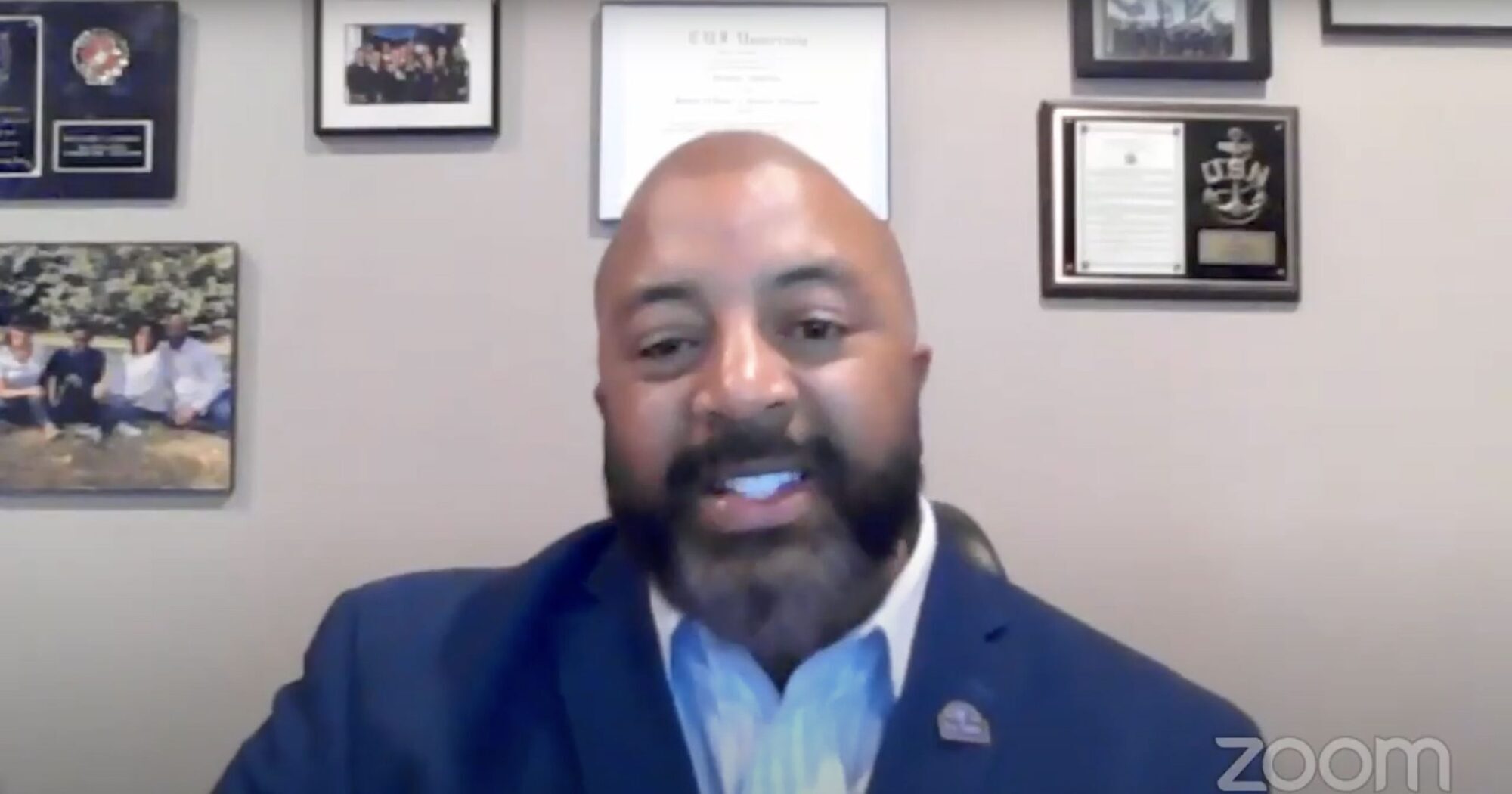
Clifford Sandsmark is a human resources manager at J.B. Hunt. During the past 11 years with the company, he’s seen a lot of candidates come and go. But one thing is clear – J.B. Hunt appreciates the knowledge, skills and abilities of America’s veterans. We asked Clifford what he likes about veteran employees and what makes J.B. Hunt a G.I. Jobs Top 50 Military Friendly Employer.
GIJ: What do new employees with prior military experience bring to your company that you like?
J.B. Hunt: Discipline, training and commitment to the job.
GIJ: Are there any special incentive benefits that might interest new military hires?
J.B. Hunt: We provide many incentives including driver bonuses, tuition reimbursement, relocation assistance for managers, and company discounts. For ex-military personnel, we have a program through MATCO tools that will provide them with a basic set of quality professional tools they will need on the job at a deep discount.
GIJ: What issues/surprises do you find that military transitioners/veterans need to be aware of when entering the civilian workforce?
J.B. Hunt: Transitioning military personnel need to understand that civilian work life is vastly different from the “command and control” structure of the armed forces. We expect and encourage our employees to take the initiative to get things done rather than “wait until told.”
GIJ: What advantages do military personnel have over their peers of the same age and education level?
J.B. Hunt: For the most part, the training received in the armed forces is superior to what a civilian can receive in private technical schools or at colleges and universities. We have also found that there is a sense of duty and discipline that students may not have when they finish school. J.B. Hunt offers opportunities that require taking on responsibilities early in their careers whether it’s driving an 80,000-lb.vehicle loaded with thousands of dollars worth of freight, maintenance of tractors and trailers that will share the road with the public, or managing a multi-million dollar operation.
GIJ: What disadvantages do you find?
J.B. Hunt: There are no disadvantages to hiring individuals willing to work hard and apply their military-acquired skills to a career at J.B. Hunt. The disadvantage is that military personnel don’t know of the many career opportunities J.B. Hunt can
offer them!
GIJ: What are the most common mistakes you see on military/veteran résumés?
J.B. Hunt: We would like to see more detail on their accomplishments on their résumés. Veterans make the assumption that the civilian world understands military acronyms, abbreviations, etc. They need to be more descriptive in their accomplishments and write so that someone who is non-military can understand what a great job they did serving our country. With that, try to keep your résumé to no more than two pages –one page if you can do it! HR managers receive dozens of résumés daily and we tend to favor those that are brief and to the point.
GIJ: What are the most common mistakes military/veterans make in interviews?
J.B. Hunt: Like I mentioned above with résumés, don’t assume civilians who have never been in the service understand military lingo. Describe your accomplishments in detail so that anyone can understand. As an employer, we want to hear how well you’ve done. I also get a lot of questions wanting to know how to dress for the interview. My suggestion is that you should always dress “for the next position.” In other words, if you’re applying for a mechanic position, a pair of dress slacks and a neatly pressed shirt will do fine.
GIJ: Is relocating essential for promotion within J.B. Hunt?
J.B. Hunt: We like to promote from within and for upward advancement willingness to relocate is a real advantage especially in operations management. For maintenance or professional driving positions, it is not essential but can be helpful. Since we are a large national company if you are willing to relocate you can take advantage of openings as they occur in different regions. Willingness to “go where the jobs are” will accelerate your career path.
GIJ: What types of positions does your company recruit military for?
J.B. Hunt: We are looking for professional drivers that take pride in what they do. It has been proven that individuals leaving the military can take advantage of our training program and become professional drivers. We have maintenance facilities around the country for individuals experienced in diesel and heavy truck mechanics. We have management in training opportunities in operations management or the individual with the right experience could be placed into an account management position. J.B. Hunt recognizes the great value in hiring our men and women of the armed forces!
GIJ: Can you describe the responsibilities of one of these positions?
J.B. Hunt: We are a major motor transport fleet with over 11,000 Class 8 heavy duty tractors at an average age of 2.5 years. Like the military, our equipment specifications are uniform so our heavy truck technicians are trained to know what to expect when a unit comes in for service or repair. Most shops work either four 10-hour days or five 8-hour days depending on location. Much like the military, our maintenance shops are clean, well lit, and have the latest tooling to complete the job at hand.
GIJ: Can a new hire stay in this position for an entire career or do you require new hires to “move up or move out” like the military does?
J.B. Hunt: J.B. Hunt offers positions for individuals who want to stay in a position and also offers career opportunities for former military personnel.
GIJ: What is the average starting pay for new hires?
J.B. Hunt: Starting pay depends on the location they are working at, cost of living for the surrounding region and any previous experience. Last year the 12-month over the road average was $50,000.
GIJ: Can you describe some of the benefits of working for J.B. Hunt?
J.B. Hunt: Medical, dental, life insurance, wellness programs, 401(k) retirement, prescription safety glasses, uniforms, a Professional Tool Discount Program and more!
GIJ: Do employees need to pay for any of their benefits?
J.B. Hunt: There are employee costs for medical, dental, and vision care, but we provide both short and long-term disability, life insurance, and wellness programs at our expense.
GIJ: Describe the typical career progression for someone at J.B. Hunt?
J.B. Hunt: With the right desire anyone can move up in his or her career. Drivers can go from over the road to local positions or move into management; mechanics can eventually manage a shop; or an operations manager can be a terminal manager or account manager. Again, J.B. Hunt likes to promote from within.
GIJ: Do you look for any specific educational requirements (i.e. bachelor’s degree/associate’s/ certification/qualification/clearance) for this position?
J.B. Hunt: No, not for the maintenance or driving positions. However, management positions may require an educational degree or equivalent relevant experience.
GIJ: What type of educational experience do you look for in military candidates?
J.B. Hunt: It depends on the position; our position requirements are posted in the job description.
GIJ: How many military veterans work in your company and what percentage of the total workforce does this comprise?
J.B. Hunt: Military veterans comprise 2,880 employees or about 17 percent of our workforce.
GIJ: Did any of the senior executives in your company serve in the military?
J.B. Hunt: Approximately 3.4 percent of our upper level management (director level and above) have self-identified as being veterans.
Sandsmark’s Words of Advice
1) Be proud of your accomplishments.
2) Describe your achievement in detail on your résumé.
3) Talk about them in your interview so anyone can understand and appreciate your accomplishments.