Field Service Engineer for Westinghouse Electric Company
Infantry officer used to direct combat soldiers, now directs nuclear engineers.
by Warren Duffie
Bill Brine brings power and heat to thousands of American homes. A pretty daunting task, right? Not in comparison to this former infantry officer’s previous job fighting insurgents in Iraq. 
“My stress level is a lot lower than most people’s,” Brine said. “Many people in the civilian world get worked up over the small things and lose sight of the big picture. Having been a platoon leader in Iraq, my worst day as a civilian is still less stressful than my best day in combat.”
Brine, 24, is a field service engineer for Westinghouse Electric Company, a leading supplier of nuclear plant products and technologies to utility and industrial customers throughout the world. Based in Madison, Pa., Brine inspects equipment on the “primary” end of steam generators at various nuclear power plants nationwide. The “primary” end channels hot water from a generators reactor into the “secondary” end, which creates steam to power the generator’s turbines.
The Daily Grind
During the “heavy” months, Brine and his crew travel to 30 plants nationwide. They work four to six weeks straight – six to seven days a week – often in 12-hour shifts. Aside from inspections, they remove worn or broken parts for repair or replacement.
Summer and winter comprise the “light” seasons. Brine plans the next series of inspections, reviews the effectiveness previous inspections, and makes sure that repaired and refurbished parts are returned to service.
“During the light seasons I’ll normally work Monday through Thursday, eight hours a day,” he said. “I get to use the planning skills I developed in the Army – receive the mission, plan and prepare, and do recon of a site, before eventually executing that mission.”
Veterans Can Power Their Futures at Westinghouse
Westinghouse provides fuel, services, technology, plant design, and equipment to utility and industrial customers in the worldwide commercial nuclear electric power industry.
Headquartered in Monroeville, Pa., Westinghouse has long been a household word in and around the world ever since George Westinghouse first started harnesseing hydroelectric at the turn of the 20th century.
“Westinghouse has an interest in hiring veterans,” said Barbara Santella, Westinghouse manager for staffing and university relations. “They possess the experience, skill sets, and work commitment we seek in employees. They are strong in teamwork and work groups, and adapt well to relocation.”
Santella projects typical salaries for entry-level positions (based on experience, education, and the position) at anywhere from $50,000 to $100,000 with a wide array of health benefits, continuing educational, specialized training, mentoring, and leadership programs.
In Uniform
Brine always wanted to become an engineer and join the military. After earning a wrestling scholarship to Lehigh University, he joined the school’s ROTC unit, graduating in 2003 with a degree in mechanical engineering.
Following his commission into the Army, he went to Fort Benning, Ga., for infantry officer basic training, Ranger school, and the infantry mortar leadership course. Brine was then assigned to Camp Casey, Korea, to serve with the 503rd Parachute Infantry Unit.
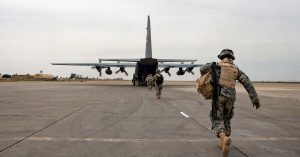
From 2004 to 2005, Brine’s unit deployed with Marines to insurgent-controlled Ramadi, Iraq. The streets were empty while the local citizens huddled in their homes.
“The people were living in fear and couldn’t go to work or school,” Brine said. “Once we stabilized the region, the local Iraqis participated in their first democratic elections. It was special to see people displaying their fingers dipped in that purple ink. We felt like we were doing some good.”
The Transition
Brine decided to leave the Army to dedicate more time to his family. Brine left the Army in May 2007 and was hired by Westinghouse in June.
“I took ACAP classes and worked with several recruiting firms,” Brine said. “A family friend who worked at Westinghouse recommended that I apply. When I got an interview, the director turned out to be a Lehigh University graduate, so that helped me get my foot in the door.”
Brine’s overtime brings in between $10,000 and $15,000 more than he did in the Army.
“My quality of life is a lot better as well,” he said. “Advancement opportunities are also excellent. Within three years I can be a project manager, interacting directly with management at nuclear plants. It all depends on your ambition and drive.”