Associate Banker at J.P. Morgan
How a combat vet landed a great civilian job advising wealthy clients for J.P. Morgan.
By Warren Duffie
As an enlisted Army engineer, Trevor Cobb had a reputation for analyzing a problem to its last detail, looking for unique solutions. Noticing this painstaking approach, Cobb’s sergeant jokingly told him, “Cobb, you think too much. You should be an officer.”
“I thought about it and the idea sounded great,” Cobb said. “My sergeant helped me fill out my paperwork and arrange interviews and I was able to attend West Point.”
That bit of faith paid off as Cobb used his brain power to graduate from the U.S. Military Academy, lead Soldiers into battle, earn a Bronze Star, and land an impressive civilian job with J.P. Morgan.
On the Job
Cobb, a former captain, is an associate banker in J.P. Morgan’s Seattle office and is part of a 10-person team advising high-net-worth clients with up to several million dollars in investable assets.
Cobb and his team help clients with complicated matters such as estate planning, wills and trusts, investments, money management and credit.
“I’m used to very long days from my time at West Point,” Cobb said. “We had to start the day early and memorize the front page of The New York Times by breakfast formation. The intangibles I learned – organization, discipline, sticking with a plan – come in to play every day at my job.”
In Uniform
A native of the Seattle region, Cobb enlisted in the Army in 1995. He completed basic training and engineering school at Fort Leonard Wood, Mo. He graduated from West Point in 2001, completed infantry training and attended Airborne school at Fort Benning.
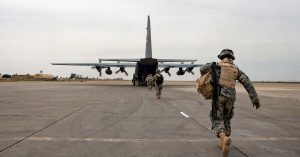
When preparations for the Iraq invasion were under way in late 2002, his battalion commander took him and other lieutenants aside to tell them they were going to war and that 40 percent of them would probably be killed. Have a nice Christmas, the commander told them.
“That hits you in a special way,” Cobb said. “When the invasion started in 2003, my unit was among the first infantry troops in the country.”
In October 2003, Cobb led a nighttime convoy down Iraq’s Highway 1, also known as the Highway of Death. He suddenly felt uneasy and told his fellow Soldiers to put on their night vision goggles. He saw movement at the top of a hill, followed by a rocket-propelled grenade slamming into the ground in front of them. Thanks to his initial gut reaction, Cobb was able to fire tracer rounds at the assailants.
The platoon’s machine gunner, responding to Cobb’s actions, unstrapped himself from the back of the Humvee, crawled across the top of the vehicle, and began firing in the same direction as Cobb, effectively pinning down the assailants. Cobb called in an attack helicopter and ended the fight. He was awarded the Bronze Star for his actions.
“The most rewarding part of my combat tour was that every single one of my Soldiers came home safely,” he said. “No one was killed.”
The Transition
Upon his return stateside, Cobb realized that injuries he sustained would prevent him from pursuing his dream of serving in counterterrorism and the Special Forces. He left the Army in 2007 and enrolled in the full-time MBA program at the University of Washington, graduating in 2009.
In 2008 he was interning at a financial company when he met someone who worked for J.P. Morgan. The pair struck up a conversation and had lunch together. The J.P. Morgan employee told him about working with high-net-worth clients. Cobb was interested and gave the man his contact information. The following year, his friend told him about an opening at J.P. Morgan’s Seattle office.
“I jumped at the opportunity,” said Cobb.
Did You Know?
In 2000, J.P. Morgan & Co. merged with Chase Manhattan Corp., in effect combining four of the largest and oldest money center banking institutions in New York City (J.P. Morgan, Chase, Chemical and Manufacturers Hanover) into one firm called J.P. Morgan Chase & Co.
Cobb’s Advice
Conduct SLLS often. “We heard this all the time in Ranger school, every 10 minutes from our instructors. It means stop, look, listen and smell. Do intelligence on the industry you want to work in. Learn all you can. Listen more than you talk.”
Smile. “In the military and business worlds, people do very serious work. However, you need to have a good time and not take yourself too seriously.”
Be flexible. “Each day will be different and present unique challenges. Be ready to face them.”
How’d You Get That Job?
“To be honest, I had a harder time adjusting to regular Army life after combat. Thanks to my MBA education, I was able to jump into the world of finance seamlessly. I make more money, but because I have to pay for everything myself now, I earn about the same as my military pay. In the service, you don’t have to pay for health care, food or housing. People need to factor that in when they decide to leave the military.”
What Cobb Likes About His Job
- Interacting with my clients and meeting their needs.
- The team-based environment of my company. It reminds me in some ways of the military.
Founded: 1799
Headquarters: New York City
Employees: More than 200,000 in over 60 countries
2009 Revenue: $108.6 billion
www.jpmorganchase.com